
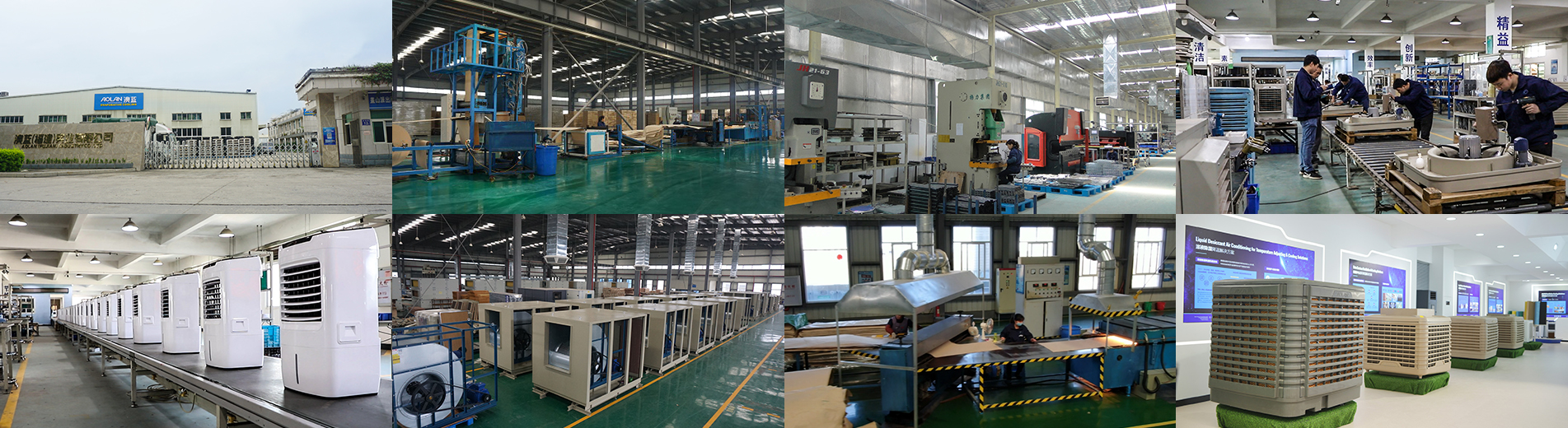
In the hot and arid regions of the Middle East and Africa, evaporative air coolers (also known as swamp coolers) are a common and effective cooling solution. So, are they truly practical? The answer is yes: in these dry climates, evaporative coolers generally work very well—even better than they do in humid areas.
The working principle of an evaporative cooler is based on the physical process of "evaporative cooling." When hot air passes through a water-soaked cooling pad, the water absorbs heat from the air and evaporates, thereby lowering the outlet air temperature. The key to this process is the dryness of the air—the drier the air, the faster the evaporation, and the more noticeable the cooling effect. Most parts of the Middle East and Africa have tropical desert or tropical savanna climates, characterized by high temperatures and low rainfall year-round, with relative humidity often below 30%. This creates an ideal working environment for evaporative coolers.
Compared to traditional compressor-based air conditioners, evaporative coolers have clear advantages: they consume only about one-tenth of the electricity, making them especially friendly to regions with poor power infrastructure; they require no complex refrigerant piping and have low maintenance costs; and while cooling, they also increase indoor humidity, relieving the discomfort caused by dry air.
Of course, evaporative coolers have limitations. During extreme heat waves accompanied by dust storms, the cooling pads and filters need frequent cleaning. Additionally, they cannot lower room temperatures as drastically as air conditioners (typically 5–10°C below ambient temperature), making them more suitable for open or semi-open spaces. Nevertheless, in the arid zones of the Middle East and Africa—excluding humid coastal areas—evaporative coolers are an economical and practical "cool relief."


 WhatsApp
Copyright © 2026 Aolan (Fujian) Industry Co., Ltd All Rights Reserved.  Network Supported
Leave A Message
Scan to WhatsApp :

 English
  Français
 Español
 日本語
日本語 العربية