
If you live in a hot, dry climate, you’ve probably experienced sweating profusely and feeling unbearably stuffy. You may also wonder how to cool down a room or house without spending a huge amount on electricity. In fact, the answer is simple: use an air cooler.
An air cooler is one of the best home air coolers because it provides a natural, energy-efficient way to cool down. Air coolers are one of the most natural and energy-efficient cooling methods because they do not use any refrigerants or chemicals to cool the air. They do not emit any harmful gases or pollutants, and they pose no harm to the environment or users’ health.
But how does an air cooler work? What is its working principle? What advantages does it have? In this blog, we will answer these questions.
What Is an Air Cooler?
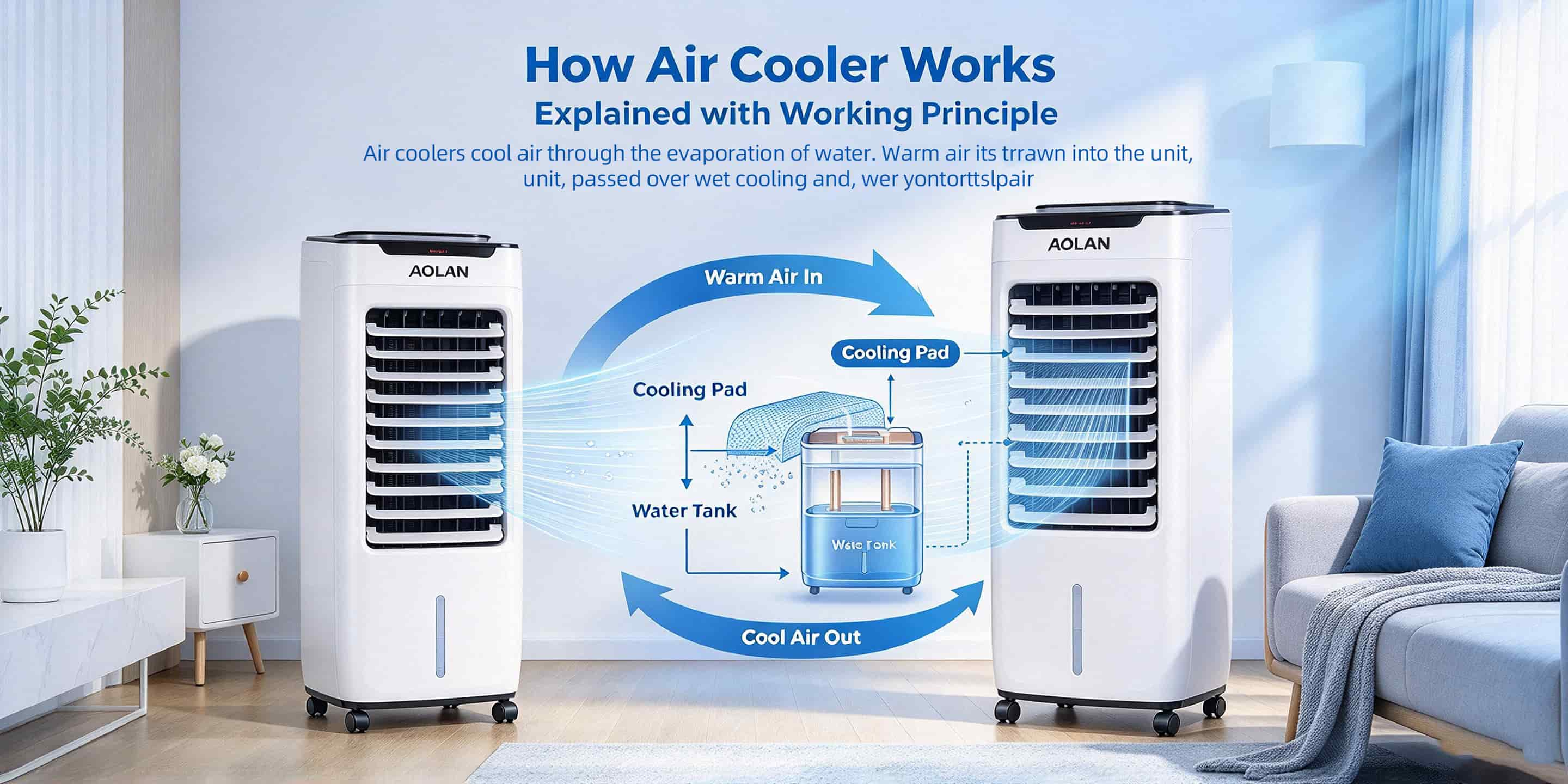
An air cooler is a device that uses water and air to cool a room or area. It works through evaporation, the process of converting water into a gaseous state. When water evaporates, it absorbs heat from the surrounding air, thereby lowering the air temperature. This is how an air cooler works. Air coolers are usually equipped with a water tank or water supply connection for supplying and storing water. A fan or blower is connected to the air cooler, drawing dry, hot air from the surrounding environment and blowing it through a wet cooling pad or water tray. The water in the wet cooling pad or water tray evaporates, making the air cooler and more humid. The cooled air is then released into the room or area through vents or ducts. From residential floor-standing and large industrial evaporative air coolers to window and commercial tower air coolers, there is a wide variety of air coolers available on the market.
How an Air Cooler Works
An air cooler works on the basis of evaporation, which is the conversion of liquid water into water vapor. When water evaporates, it absorbs heat from the surrounding air, thereby lowering the air temperature. This is how an air cooler works. The working principle of an air cooler can be explained by the following steps:
Water is stored in the water tank.
A water pump circulates water from the tank to the cooling pad.
Hot air from the environment is drawn into the cooler.
The water in the cooling pad evaporates, lowering the air temperature.
A fan or blower blows out cool air.
Detailed Explanation of How an Air Cooler Works
The working principle of an air cooler can be summarized as follows:
Water is stored in the water tank: The first step in how an air cooler works is storing water in the water tank. Water can be supplied through a tap water pipe or added manually. The water tank is usually equipped with a water level indicator showing the remaining water amount.
A water pump circulates water from the tank to the cooling pad: The second step in how an air cooler works is circulating water from the tank to the cooling pad. The water pump is responsible for this task.
The third step in how an air cooler works is drawing hot air from the environment into the cooler. A fan or blower is responsible for this task. The fan or blower can be axial or centrifugal. The fan or blower draws dry, hot air from the surrounding environment and blows it through the cooling pad.
The water in the cooling pad evaporates, lowering the air temperature: The fourth step in how an air cooler works is evaporating the water in the cooling pad, thereby lowering the air temperature. The cooling pad is responsible for this task. The hot air blown by the fan or blower then flows through the cooling pad. The water in the cooling pad evaporates, and the air becomes cooler and more humid. The evaporation process lowers the air temperature while increasing the air humidity.
A fan or blower blows out cool air: The fifth and final step in how an air cooler works is blowing out cool air through the fan or blower. The fan or blower is responsible for this task. The fan or blower blows the cool, humid air from the cooling pad and delivers it to the room or area through vents or ducts.
Advantages of Using an Air Cooler
There are many advantages to using an air cooler, especially in hot, dry climates with low humidity.
Some of the advantages of air coolers include:
Energy-efficient: Air coolers consume less electricity than air conditioners and can save up to 80% of energy costs.
Cost-effective: Compared with air conditioners, air coolers are cheaper to purchase and maintain, and they require no installation or ductwork. Air coolers also have a longer service life than air conditioners, with no repairs or maintenance required.
Environmentally friendly: Air coolers do not use any refrigerants or chemicals to cool the air, and they do not emit any harmful gases or pollutants that could harm the environment or users’ health.
Conclusion
In summary, we have learned how an air cooler works, including its components and the steps of the cooling process. That is, cooling based on the principle of evaporation. In addition, we discussed the advantages of using air coolers, such as energy efficiency, cost-effectiveness, environmental friendliness, and portability.
Choosing the right air cooler is essential to ensuring cost-effective cooling. When choosing an air cooler, factors such as room size, temperature range, and humidity level should be considered. In addition, regular maintenance of the air cooler and troubleshooting common issues can help extend its service life and minimize costs.
If you are looking for a portable cooling solution, consider buying a portable air cooler, which can be easily moved from one room to another or taken outdoors. These devices are ideal for camping, picnics, or other outdoor activities with limited power supply.
Finally, it is worth mentioning that evaporative cooling systems are generally more energy-efficient than traditional air conditioning systems, making them an excellent choice for those who want to reduce carbon emissions and save on energy costs. With an air cooler, you can enjoy a cool and comfortable summer while contributing to environmental protection.


 WhatsApp
Copyright © 2026 Aolan (Fujian) Industry Co., Ltd All Rights Reserved.  Network Supported
Leave A Message
Scan to WhatsApp :
 English
 Français
 Español
 日本語
 العربية